
INMAYPACK · Dry beans and pulses
Dry Beans Packaging Machine
Match the bean, the portion and the finished pouch.
Configure weighing and pouch packing for dried beans, chickpeas, lentils and pulse blends. Choose the pouch route, check product transfer and define finished-pack acceptance using your actual ingredients and packaging samples.
Send the dry product, target fill weight and bag drawing first. Equipment scope and performance are confirmed for the selected combination.
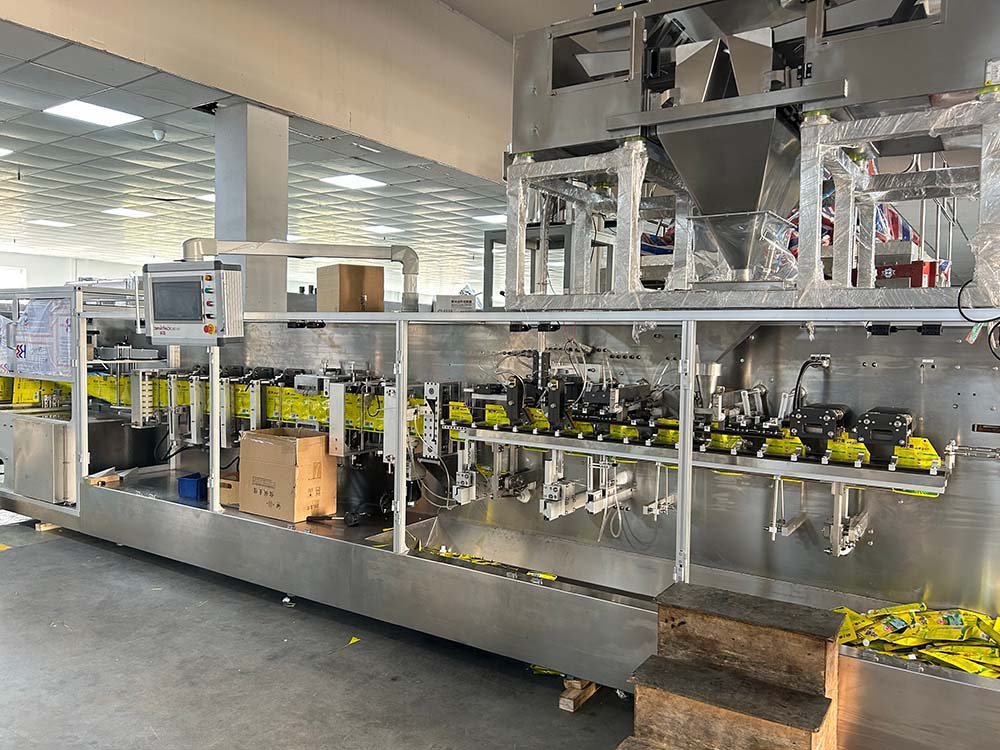
A packaging system for dry beans, not every product called a bean
A beans packaging machine combines product feeding, portion measurement, bag filling and closing. The useful specification starts with a dry, prepared product and ends with an accepted retail pouch. INMAYPACK reviews this application through its existing granular-product weighing and flexible-pouch equipment families.
Submit kidney beans, black beans, white beans, mung beans, chickpeas, lentils or a defined dry blend for evaluation. Naming an ingredient does not approve every grade, portion or package. Whole beans, split pulses and screened fines can require different feed settings, discharge paths and cleaning checks.
This page does not cover cooking, washing, drying, sorting, sterilization, canning or bulk-sack filling. Cooked beans in sauce require a different processing and filling review. Roasted coffee beans belong to the coffee bean packing machine route, not this dry-pulse application.
Selection rule: approve each product-and-pouch combination, not just a machine name. A line that handles the largest whole bean may still need a separate recipe and cleanout check for small lentils or a mixed soup blend.
Build the trial around the extremes of your bean range
Send representative material from production, with its lot identity and incoming specification. Include the largest pieces, smallest saleable fraction and the expected variation in dust or broken material. State whether the product arrives from a hopper, an elevator or manually loaded containers.
On small screens, scroll horizontally to compare the full matrix.
| Product condition | Configuration question | What the trial should show |
|---|---|---|
| Large whole beans or chickpeas | Can the hopper outlet, chute and open pouch pass the largest expected pieces? | Complete discharge without trapped beans, bag-mouth impacts or interruptions at the target portion. |
| Small beans, lentils or split pulses | Can the feeder meter the portion without uncontrolled run-on or residual product between batches? | Individual pack weights, transfer residues and cleanout after the agreed stop. |
| Lots containing skins, splits or fines | Where does loose material accumulate, and can it reach the sealing interface? | Incoming and packed samples, residue locations and seal-area observations from the same run. |
| Mixed dry-bean or soup blends | Is the requirement a premixed assortment or a controlled quantity of each ingredient? | Pack-by-pack component checks at startup, normal running, refill and the end of the batch. |
| Several varieties on one line | Which contact points can retain a previous variety, and which settings or parts change? | A documented changeover from the difficult outgoing product to the sensitive incoming product. |
Keep the proposed sample set small enough to test properly but broad enough to represent the actual SKU range. A large-bean test, a small-pulse test and a blend test answer different questions; do not replace them with repeated runs of the easiest product.
Choose the bag supply route before fixing the machine
Purchased premade pouches
Use this route when an existing retail bag, zipper or printed presentation defines the product. Review opening, filling access, gusset expansion and the clear top-seal area using production-equivalent empty bags.
The premade pouch machine family provides the platform choices. Confirm the bag range, change parts, zipper handling and selected filler in the proposal rather than assuming every accessory is included.
Stand-up pouches formed from roll film
Evaluate horizontal form-fill-seal when the retail pouch will be made from reel material. Coordinate film forming, opening, portion release, settling and sealing as one sequence.
Review the doypack machine range with your film supplier's specification and a filled-pack sample. A film price comparison alone does not establish the lower total project cost.
These are flexible retail-pouch routes. An open-mouth woven sack, industrial bulk bag or a requested vertical bag style is not automatically covered by the equipment pictured here. Identify the package first so the quotation does not silently substitute a different format.
Check usable pouch volume and filling access together
Specify target net weight alongside the actual product's loose bulk condition. The same weight of different bean varieties does not necessarily occupy the same volume. Use a sample fill to establish the filled height, gusset shape and clearance below the zipper or top seal.
- Drawing: give external width and height, gusset dimensions, seal locations, zipper position and the usable filling opening.
- Material: provide the bag or film supplier's construction, thickness range, sealing guidance and representative production samples.
- Largest pieces: check their route through the selected discharge outlet and pouch mouth, not just their fit inside an already filled bag.
- Filled pack: agree acceptable appearance, stability, seal-area clearance and handling checks after filling.
Request the agreed handling or drop checks with the real filled pouch. A successful empty-bag opening test cannot establish how the filled package behaves during collection, cartoning or transport. Package protection and shelf life require their own product-and-material validation; the bagger does not establish them by itself.
Select weighing by product flow and portion requirement
A multihead weigher packing system is one candidate for discrete dry beans and pulses. Match feeding, hopper capacity and discharge behavior to the actual portion. The documented figures on the equipment page belong to their stated reference configuration; they are not dry-bean line guarantees.
Where a linear weighing system is also proposed, use the existing multihead versus linear weigher comparison to assess both with the same product, bag, tolerance and accepted-output requirement. Neither head count nor a no-load cycle rate determines the best purchase.
If volumetric cups are suggested, ask how changing bulk condition affects the finished net weight and how the system will be checked between lots. Do not treat a repeatable volume as proof of a repeatable weight across different bean sizes, varieties or product conditions.
Include every transfer point in the review
Follow the beans from loading through elevation, distribution, weighing and the chute into the pouch. Review impact points, retained product, feed interruptions and access for cleaning. Agree the response to an unavailable pouch or stopped downstream station so a correctly weighed portion is not released at the wrong time.
Provide room height, loading access, platform requirements and service clearances. Confirm utilities and line signals for the selected system. The footprint of the pouch machine alone does not show the space needed for an overhead weigher, support structure and refill equipment.
Give mixed beans a separate composition requirement
Decide whether the buyer needs a broadly mixed assortment or a specified amount of each ingredient. Total pack weight cannot, by itself, demonstrate the proportion of kidney beans, small lentils or other components in a mixed pack.
For a premix, sample finished packs across the batch, including refill and low-level conditions. Sort and record components using the same agreed mass or count basis. Preserve the run stage with each result so a batch average does not hide a change between the first and last packs.
If each ingredient needs a controlled dose, ask for a specifically engineered feeding and weighing arrangement. Separate ingredient supply, controls, space, cleanout and acceptance must be quoted. A standard combination weigher is not automatically a recipe-blending system.
Application review note: keep component proportion, total weight and visible foreign-variety carryover as separate checks. Passing one does not cancel a failure in another. This is a proposed purchasing method, not a claim of completed INMAYPACK blend trials.
Plan variety changes and product-contact cleaning
Map the places that may retain beans or small pulse fragments: loading equipment, distribution surfaces, hoppers, discharge gates and chutes. Agree access and the approved cleaning method before selecting the layout. Do not infer washdown suitability from stainless-steel construction or from one removable component.
Test the actual changeover sequence. Record the outgoing variety, the parts opened or removed, collected residual material, the incoming recipe and the first accepted pouches. Your quality team should define the release criterion for remaining product, ingredient changes and any relevant allergen controls.
Include production preparation in the handoff: incoming beans should meet the agreed condition before they enter the packaging equipment. Sorting, foreign-material removal and product treatment are separate responsibilities unless expressly included. If inspection equipment is requested, confirm its application, reject handling and validation method in the supply scope.
Approve the complete dry-bean pack with a written trial
Agree the SKU matrix, sample lots, bag materials, nominal weights, operating period and defect definitions before the factory acceptance test. Keep machine settings and sample labels with the results. Do not quote the fastest isolated weigh cycle as the accepted pouch output.
On small screens, scroll horizontally to read the evidence checklist.
| Acceptance item | Record to request | Keep separate from |
|---|---|---|
| Net weight | Individual measured pack results, tare method, target range and reject disposition. | Weigher display values without finished-pouch verification. |
| Product condition | Incoming and packed samples from the same lot, using agreed definitions of splits, broken material and fines. | Damage already present before the beans enter the line. |
| Mixture and carryover | Component results and previous-variety checks, labeled by run stage and changeover. | Total pack weight or a blended batch average. |
| Package quality | Pouch opening, filled appearance, clear seal area, seal checks and agreed handling results. | Successful empty-bag cycling. |
| Usable output | Accepted finished pouches over the agreed elapsed time, with stops, refills and rejects listed. | Nominal speed, empty cycles or isolated weighments. |
Fix the counting point: identify where a pouch becomes accepted output, after the agreed inspection and rejection steps. Record total pouches, confirmed rejects and packs held for review on the same test basis. A weigher discharge or bagger counter alone must not be reported as the number of released, conforming packs.
Include a planned stop and restart, a representative refill and the agreed format or variety change. Record held material and restart rejects rather than removing them from the account without explanation. Any exclusions should be visible in the test report.
For the selected line, agree controlled tests for product starvation, an unavailable pouch and downstream blockage. Where inspection and rejection are included, verify that the identified test pack reaches the intended reject outlet and define the response to failed reject confirmation. Assign each signal, stop response and restart authorization to the responsible supplier or operator before acceptance.
Before shipment, identify open items and their closure criteria. Keep approved samples, settings, drawings and records for the site acceptance review. Define which tests will be repeated with the customer's utilities, operators and connected equipment.
Compare complete quotations and cost per accepted pouch
Request a scope-separated beans packing machine quotation: product feeder, weigher, support platform, pouch machine, change parts, coding, inspection and discharge handling. Mark every item as included, optional, customer-supplied or excluded. Confirm installation interfaces, training, manuals, spares and service responsibility in the issued offer.
Product and packaging costs
Separate giveaway in accepted packs from spillage, retained beans and rejected product. State which rejects can be recovered under your quality procedure. Include bags or film, setup waste and routine consumables on the same accounting basis for each proposal.
Operating schedule
Include the planned SKU changes, cleaning, refill labor and maintenance work. Compare costs using accepted pouch quantity over the same period. Keep capital price separate from operating cost, and label estimates where production evidence is not available.
No universal price, savings percentage or delivery date is published here. These depend on the approved range and scope. Use the packaging machine RFQ builder to organize your product samples, pouch drawings, target weights, required output, site layout and test requirements.
Dry beans packaging machine questions
Can one machine pack kidney beans, mung beans and lentils?
One configured line may cover several dry products, but the approved range must be demonstrated. Check the largest whole pieces, smallest pulses, portion extremes, discharge path and cleanout. Record which changes use settings and which need different parts or a separate arrangement.
Is a multihead weigher always the right choice for beans?
No. Compare the proposed weighing route against product behavior, target portion, required accepted output, available space and changeover needs. Use actual trials under the same conditions to assess multihead and linear alternatives.
Can it keep the exact recipe of a mixed-bean pack?
Not automatically. A portion from a premix can meet total weight without meeting a specified component ratio. Define the recipe requirement and sampling basis; separately controlled ingredient dosing needs a confirmed feed-and-control configuration.
Does this application include coffee beans or cooked beans?
No. Coffee has a separate application route. Cooked or sauce-filled beans change product handling, hygiene and processing requirements and need a different review. This page addresses dry prepared beans and pulses in flexible retail pouches.
Can this equipment fill bulk sacks?
Bulk sacks and open-mouth industrial bags are outside this page's stated scope. Send the actual package drawing and filled weight before discussing equipment; a retail pouch reference must not be used as proof of bulk-bag capability.
What do you need to quote a dry-bean packing line?
Send product photos and representative samples, the variety or blend list, target weights, bag drawings and samples, accepted-output requirement, cleaning expectations and site constraints. The proposal should identify the equipment, options, responsibilities and acceptance evidence.
Get a configuration review for your beans and pouches
Start with the product and finished package. INMAYPACK can review the weighing and pouch route, identify the sample checks and define a project-specific supply proposal.
Equipment scope is grounded in the linked INMAYPACK granular-product and weighing families. The application matrix and trial checklist are proposed purchase requirements, not published customer results. Final compatibility, output and acceptance criteria require an agreed configuration and representative samples.