Coffee vacuum packaging, nitrogen flushing and a one-way degassing valve perform different jobs. Vacuum removes air before closure. Nitrogen flushing replaces part of the package atmosphere before sealing. A degassing valve releases gas from the closed bag while limiting outside air entry. A project may combine these features, but none alone proves freshness, low residual oxygen or shelf life.
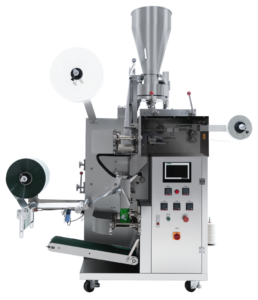
This guide helps buyers choose the gas-management scope before ordering a coffee bagging line. Start with the coffee condition and approved package, then decide which process the supplier must demonstrate. For the filling and pouch-handling platform, compare the coffee pouch packing machine configurations. The comparison below is a purchasing framework, not a report of an INMAYPACK coffee vacuum or nitrogen trial.
Compare vacuum, nitrogen flushing and degassing valves by function
The useful question is not simply which option is best. Ask what must happen to air during packaging, to gas released by the coffee after sealing, and to oxygen entering during storage. Those are connected but distinct problems.
On smaller screens, focus the comparison and use the arrow keys or swipe horizontally.
| Option | Main function | What it does not establish | Decision evidence |
|---|---|---|---|
| Vacuum packaging | Evacuates air from a package or controlled enclosure before final closure. Some architectures also backfill gas. | A vacuum-pump rating does not define the atmosphere in the finished pack, acceptable coffee condition or storage life. | Actual coffee and film, evacuation sequence, dust control, finished shape, seal condition and agreed package tests. |
| Nitrogen flushing | Introduces nitrogen to displace air in the packaging zone or open package before sealing. | Gas purity at the supply does not equal the oxygen result inside each sealed bag. Flushing is not a degassing valve. | Gas delivery and sealing sequence, supply limits, consumption basis and package-level oxygen sampling. |
| One-way degassing valve | Provides an intended route for gas released inside the sealed coffee bag to escape while limiting inward air flow. | A valve does not actively flush the initial headspace. Its presence does not prove correct installation or package integrity. | Approved valve and pouch construction, attachment process, product compatibility and a suitable valve-function test. |
Not an either-or rule. Industrial coffee systems can combine vacuum with gas backfill. A compatible valve may also be part of a selected package. Combination is an architecture decision requiring supplier confirmation, not a default feature of every coffee packing machine.
Define the coffee and finished bag before selecting gas control
Whole beans and ground coffee need separate reviews
Record the supplied roast condition, product temperature, time and handling between roasting and packing, and the storage method before filling. Coffee can release carbon dioxide after roasting. Treat that behavior as a product input: do not copy another roaster's waiting period or assume the same release pattern for beans and grounds.
For whole beans, examine dosing, product damage and how the filled package behaves during evacuation or gas treatment. For ground coffee, also review dust carried toward the seal, valve area, filters and gas-handling components. An instruction to increase vacuum or gas flow may change product movement without solving the original problem.
Decide the intended pack presentation
A compact vacuum brick, a flexible pouch and a retail stand-up bag are not the same specification. Approve the desired shape, allowable changes after sealing, usable label area, headspace and handling through checkweighing or cartoning. Package appearance alone is not an oxygen test: neither a soft bag nor a tight bag proves a defined atmosphere.
Include the full fill-weight range and pouch-size range in the review. Changing dose within one bag changes the free volume and product position. A configuration accepted at one combination should not automatically be released for all other combinations.
Choose the architecture, not a nozzle or pump in isolation
When vacuum is part of the proposed route
Identify whether evacuation takes place in a chamber, an integrated forming line or another controlled station. Specify when the package is filled, evacuated, optionally backfilled and sealed. Ask how coffee particles are prevented from compromising the sealing zone and how the line handles an incomplete cycle.
Use the broader food vacuum packaging route comparison to distinguish architectures. A generic granule-vacuum model is not automatically a confirmed coffee configuration. Request a project-specific suitability review before treating any model as approved for your roast, grind or finished bag.
When nitrogen flushing is part of the proposed route
Review where gas enters, how the package is opened and supported, the time between filling and sealing, and how supply interruptions are detected. The useful output is an agreed finished-bag result under defined operating conditions, not simply a flow reading or a photograph of a gas connection.
A nitrogen proposal also needs a supply boundary: external source, available pressure and quality, distribution, regulator or gas panel, monitoring and the supplier responsible for each item. The modified atmosphere packaging guide explains the wider process definition. Do not assume nitrogen flushing alone validates shelf life.
Specify the degassing valve and coffee pouch as one package
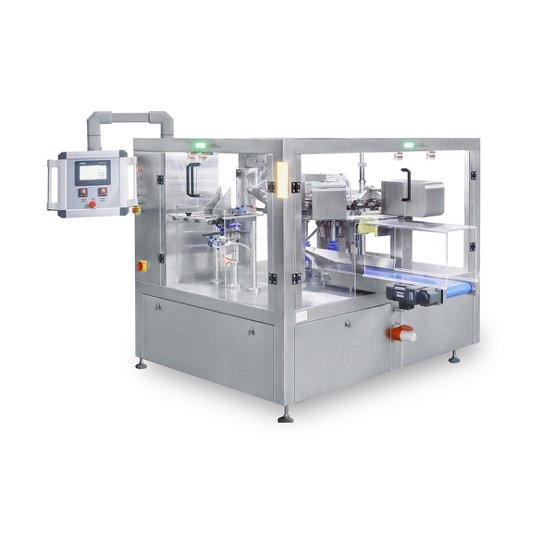
A valve is not an independent freshness guarantee. Give the converter and machine supplier the controlled pouch drawing, film construction, valve specification, attachment location and the finished seal geometry. The valve position must be reviewed against pouch gripping, opening, dosing, any gas-treatment station and downstream handling.
- Valve supplied in the pouch: identify who installs and checks it before bags reach the machine. Buying pre-valved bags does not imply the packing machine includes a valve applicator.
- Valve applied on the line: require an explicit equipment and responsibility scope, compatibility review, placement check and response to a missing or misplaced valve. Do not infer this module from a general bagging-machine quotation.
- Ground coffee or dusty conditions: ask the valve supplier about the intended product, any relevant filter and the approved orientation. Not every valve design has the same construction or operating behavior.
- Integrity testing: the valve's intended gas path must be considered when choosing a package test. Agree how the method distinguishes intended valve action from an unintended leak.
Keep film barrier, seals and valve performance connected in the package specification. A functioning valve cannot repair a contaminated seal or substitute for a suitable film. Conversely, a satisfactory seal test does not establish the valve's function.
Engineering review note: approve the package and process together. If coffee condition, grind, valve, film, dose or gas sequence changes, identify the tests that need repeating before extending the original approval.
Make coffee packaging quotations comparable
Ask each supplier to mark items as included, optional, buyer-supplied or outside scope. An item with no named owner is an unresolved interface, not a free inclusion. Compare the complete accepted package before comparing the headline machine price.
| Scope item | What the quotation should identify | Responsibility to assign |
|---|---|---|
| Coffee and pouch definition | Product condition, grind or bean specification, dose range, drawings, film, closure and valve version. | Product owner, converter and equipment supplier review their respective inputs. |
| Vacuum or gas-treatment stations | Named process steps, compatible package, changeover scope, alarms and incomplete-cycle response. | Machine supplier confirms the proposed configuration in writing. |
| Nitrogen source and distribution | External source, site connection, supply requirements, monitoring and the basis for any consumption estimate. | Assign source, piping and machine-side circuit separately. |
| Valve and attachment | Approved component and position, pre-valved bag supply or explicitly specified application equipment. | Converter, valve supplier and any applicator supplier, as actually contracted. |
| Measurement equipment | Analyzer, sampling accessories, package preparation and relevant calibration or verification arrangements. | Buyer, testing provider or named supplier. Do not presume an analyzer is included. |
| Acceptance and storage validation | Package tests, operating events, acceptance authority, records, handling and storage-study ownership. | Agree the machine trial separately from product-quality and shelf-life validation. |
For an INMAYPACK project, the final proposal must identify which of these functions and peripherals are actually offered. This article does not confirm a standalone nitrogen generator, vacuum module, valve applicator, analyzer or automatic oxygen-rejection system as standard supply.
Agree the evidence before calling a route successful
Compare candidate routes using the same controlled coffee and package definition. Record differences explicitly if one route requires another pouch construction or valve arrangement. Otherwise, the comparison mixes a process change with a package change and cannot isolate the reason for the result.
- Check the finished package: dose, appearance, product in the seal area, closure and valve placement where applicable.
- Measure the agreed atmosphere: identify the instrument, headspace preparation, sampling time, package identity and acceptance rule. Use the coffee pouch residual oxygen testing guide for the detailed sampling and trial-record method rather than inventing a universal oxygen limit.
- Challenge operating changes: agree checks around startup, stop and restart, supply interruption and relevant size or dose changeovers. Determine how affected packages are identified and handled.
- Keep distinct approvals distinct: machine-cycle acceptance, package integrity, valve function and storage-quality validation need their own suitable evidence. One passing result does not replace the others.
When a result falls outside the agreed requirement, investigate the relevant path: initial air displacement, gas supply, sealing contamination, package leakage, valve condition or measurement setup. Increasing gas flow without identifying the cause can hide the issue and leave the same failure at restart.
No fixed degassing delay, oxygen percentage, vacuum level, gas consumption, machine speed or shelf-life period is specified here. Those values require the actual product, package, proposed equipment and agreed validation conditions.
Questions buyers ask about coffee vacuum and nitrogen packaging
Is nitrogen flushing better than vacuum for coffee?
There is no universal winner. Compare the required bag shape, coffee condition, dose, film and approved package tests. Vacuum and gas backfill can also be combined in certain industrial architectures, so ask what the proposed system actually does rather than choosing from two labels.
Does a degassing valve replace nitrogen flushing?
No. A valve manages gas release from the closed bag. Nitrogen flushing acts on the atmosphere during packaging. A valve does not actively remove the initial oxygen in the headspace, and flushing does not establish correct valve operation.
Can beans and ground coffee use the same gas settings?
Do not assume so. Product condition, gas release, dust, package free volume and sealing behavior can differ. Release a configuration for the defined product and bag, then review which settings and checks must change for another product.
What should I send before asking for a coffee gas-management quotation?
Send the coffee condition, beans or grind, dose and bag range, pouch drawing and film, valve details where fitted, desired presentation, output requirement, site gas information and the intended package tests. Ask the proposal to separate confirmed equipment, options, buyer-supplied items and validation work.
Primary technical references: Goglio vacuum coffee architectures illustrates evacuation and gas-backfill combinations. Goglio one-way degassing valves explains valve function and application variants. AMETEK MOCON coffee package testing distinguishes headspace, integrity and valve checks. These are process references, not evidence that INMAYPACK supplies those companies' equipment or achieves their product claims.
Define your coffee package before selecting the machine
Send the available product and package details. INMAYPACK can review the proposed pouch-handling and filling configuration and clarify the project scope. Suitability, optional functions and acceptance conditions must be confirmed in the quotation and trial plan.
- Coffee
- Beans or grounds, condition at filling, dose range and available samples.
- Package
- Bag drawing, film, closure, valve and desired finished presentation.
- Process
- Vacuum or nitrogen requirement, site supply information, output and package-test basis.
- Scope
- Required functions, buyer-supplied items, named interfaces and acceptance authority.
Start with what is available. Photos and controlled drawings can follow during the technical review.