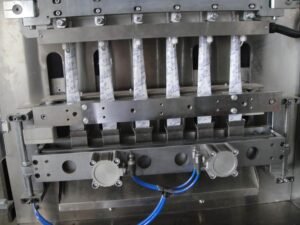
Choose a single-lane stick pack machine when the required batches can be completed on one proven pack path and flexibility matters more than parallel output. Consider a multi-lane stick pack machine when repeat demand can use several lanes without overwhelming product supply, inspection or secondary packing. The deciding measure is accepted orders completed on time, not the largest lane count.
For a production manager, the harder choice is often one multi-lane machine versus several independently scheduled single-lane machines. This guide compares those operating arrangements using batch size, product changes, shared resources and delivery requirements. It does not set a universal volume threshold, promise a particular changeover time or replace a trial with your product and film.
Single lane, multi-lane or several independent machines?
Single-lane and multi-lane describe parallel pack paths, not quality grades. A multi-lane system coordinates several forming and filling positions within one machine. Several single-lane machines instead provide separate schedules, subject to the resources they still share. Neither arrangement automatically wins on labor, uptime, cost or usable floor space.
| Arrangement | A reason to evaluate it | What can overturn the choice |
|---|---|---|
| One single-lane machine | Lower repeat demand, development batches or a schedule that benefits from keeping one pack path simple. | The total order load does not fit after realistic cleaning, format changes, checks and stops. |
| One multi-lane machine | Repeat orders with compatible product and format requirements can use parallel output in sustained campaigns. | Short campaigns, weak product distribution or downstream restrictions erase the expected capacity benefit. |
| Several single-lane machines | Different orders need separate start times, product schedules or dedicated contact parts. | Shared operators, product preparation, inspection or cartoning prevent simultaneous production. |
Start with the INMAYPACK stick pack machine platform for the documented equipment boundaries. Keep model specifications on that product page; the choice here concerns how an approved configuration fits a production schedule.
A narrow back-seal stick and a flat perimeter-sealed sachet are not interchangeable simply because both are single portions. Fix the finished drawing first. If the package itself is undecided, resolve the stick pack versus sachet format before comparing lane arrangements.
Translate demand into batches, not an annual average
An annual volume can hide the real constraint: several products may all be due in the same week. Prepare one row for each order or representative batch. Use the number of accepted sticks needed, the production deadline and the earliest time that product, film and quality release will be ready.
Group SKUs by the changes they actually require. A flavor change at the same pack size may still need product recovery, cleaning and release. A width change may require a different film layout and forming components. Similar artwork does not establish interchangeable tooling, and a shared dose does not establish identical product behavior.
| Record for each batch | Why it affects the decision | Evidence to obtain |
|---|---|---|
| Accepted quantity and due date | Shows the actual delivery load and overlapping deadlines. | Order requirements and the production calendar. |
| Product and cleaning group | Determines which batches can follow one another and which require separation or release. | Approved product-contact cleaning and quality requirements. |
| Stick drawing and film | Defines format families, tooling and roll availability. | Controlled drawings, film specifications and supplier lead times. |
| Trial-proven accepted rate | Converts an order quantity into production time. | Same-product test records with a clear timing boundary. |
| Change and restart time | Captures the interval that does not produce released sticks. | Last-good-to-first-released changeover observations. |
| Shared downstream resources | Determines whether separate machines can really run together. | Staffing, counting, cartoning and release schedules. |
Then compare two realistic schedules: group compatible batches into campaigns on one multi-lane machine, and allocate orders independently across the proposed single-lane machines. Include any inventory holding or expiry constraints that limit campaign size. A large campaign is not useful if it produces stock the business cannot reasonably sell or store.
Do not confuse lanes with independent SKU capacity. A shared film web, product supply or machine timing can constrain what runs together. Different flavors, doses or artwork across lanes require an explicitly engineered and approved arrangement; they are not implied by the lane count.
Calculate completion time on a consistent basis
For each candidate configuration, use an accepted production rate measured with the intended product, film and pack. State exactly which events the measurement includes. A short uninterrupted demonstration and a whole production shift provide different planning inputs.
Batch running time = required accepted sticks ÷ demonstrated accepted sticks per minute.
Scheduled batch time = running time + changeover/release time + other stops not already included in the measured rate.
The second line prevents double counting. If the measured rate already includes normal refill and reel changes, do not add the same losses again. If it covers only steady running, account for those interruptions separately. Record assumptions rather than applying an unexplained universal efficiency factor.
On one multi-lane machine, place the batches in their proposed sequence and total the occupied time before each deadline. For several independent machines, assign each batch to a specific machine and check the longest occupied schedule, while also checking shared resources. Dividing total work by the number of machines is only valid if the work can actually be distributed that way.
Find the batch-size crossover without inventing a threshold
Where both options can produce the same approved pack, compare their setup time plus batch quantity divided by their respective accepted rates. A configuration with a longer setup but a faster proven rate may become attractive for a larger batch. Solve that comparison using measured values for your SKU, then check the whole order schedule. The crossover for one product is not a factory-wide purchasing rule.
Test a second schedule with the busiest credible order mix and a delayed release or planned service stop. This is a planning scenario, not a claimed machine result. Keep the assumptions visible so purchasing can see whether the preferred route remains workable when the schedule changes.
Measure complete changeovers and shared-stop exposure
Time a change from the last accepted stick of the outgoing batch to the first released stick of the next. Include clearance of old product and packaging, cleaning, drying where applicable, replacement parts, film loading, recipe and code checks, setup waste, first-off sampling and quality approval. Measuring only the mechanical part swap understates occupied time.
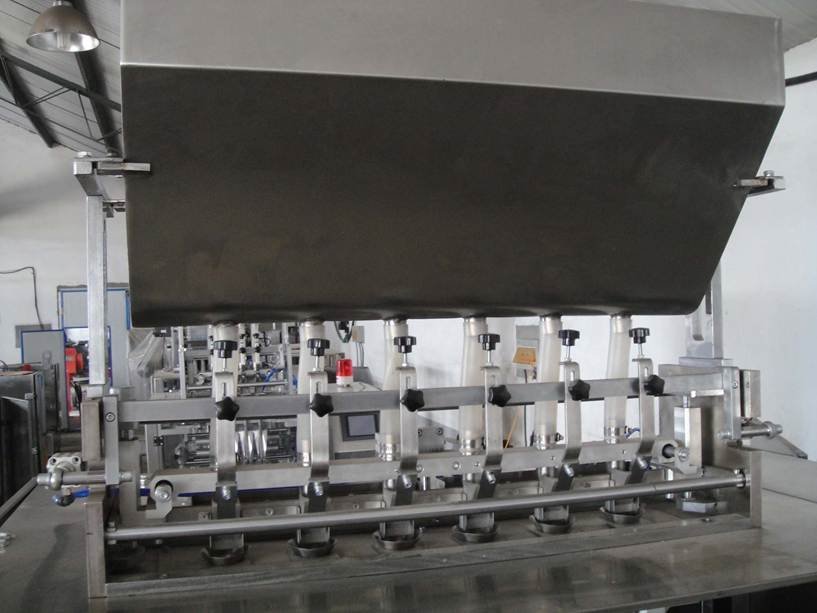
A multi-lane configuration adds parallel contact and pack paths that must be included in the changeover method. Access, removable assemblies, duplicate change parts and the cleaning procedure can matter as much as the lane count. Do not assume that every multi-lane design changes slower than every single-lane design; ask for a representative demonstration.
Separate machines can let one approved batch continue while another machine is being changed. That advantage disappears if both depend on the same unavailable operator, product feeder, extraction system or downstream station. Request a layout that includes replenishment access, service space and safe material movement, not just machine footprints.
Ask what happens when one lane has a problem
Confirm whether the proposed machine can isolate a lane, how the associated product and film are handled, and whether the remaining output stays within the approved operating condition. Lane isolation is a configuration-specific function, not a general feature to assume. A common film, drive or control fault can still affect all lanes.
Use the existing explanation of multi-lane stick pack operation and lane-level checks for the process detail. In this comparison, translate the demonstrated fault response into the production schedule and recovery plan.
Size the system around accepted cartons, not loose sticks
Decide where production is considered complete: loose accepted sticks, counted groups, finished cartons or released shipping cases. A faster primary machine is not a complete capacity increase if its output accumulates ahead of a slower counting or packing operation.
For a carton containing a fixed number of identical sticks, the required stick supply is the target accepted cartons per minute multiplied by the sticks per carton. This is a count relationship, not proof that a particular conveyor or cartoner can handle the flow. Add the defined treatment of rejected, missing, damaged or surplus sticks.
Variety cartons require a different check. If a carton needs sticks from several flavors, confirm the availability of each flavor and the grouping method. More output from one flavor cannot compensate for a missing component. Independent machines may offer scheduling options, but identity, counts and transfer controls still need a project-specific design.
For every arrangement, define buffer capacity, blocked-discharge signals, restart sequence and the owner of count verification. Evaluate whether a downstream stop pauses all primary machines or only the relevant feed. Use the packaging system integration checklist to assign those responsibilities.
Industry reference: IMA Tecmar’s STICK PACK series lists integration with collators, cartoners and end-of-line equipment. This supports reviewing the secondary-packaging interface; it does not establish those functions or performance for an INMAYPACK quotation.
Prove the arrangement before comparing the final investment
Ask shortlisted suppliers to work from the same batch sheet and acceptance requirements. Do not compare one option using easy-flowing demonstration product and another using your difficult formula. Supply representative film and product, and agree the pack drawing, checks and permitted interventions before testing.
- Prove the demanding batch. Select the product and format most likely to constrain filling, sealing or handling, not only the easiest SKU.
- Prove a representative change. Observe the complete product or format change that matters to the actual order mix, including release.
- Keep lane identity in the evidence. Retain dose and pack-quality checks by lane and time, rather than relying on an acceptable combined average.
- Include the handoff. Demonstrate the intended count, collection or cartoning condition, or explicitly list any interface not tested.
- Rebuild the schedule. Replace estimated rates and change times with the demonstrated results, then check the agreed delivery window again.
Compare purchase and operating scope only after both arrangements satisfy the production requirement. Include included formats, duplicate contact sets, installation, staffing, utilities, maintenance, inspection, waste and inventory implications on the same costing basis. Several smaller machines are not automatically cheaper, and a larger machine does not automatically deliver a better payback.
The stick pack machine price guide covers quotation scope. Keep this decision focused on which production arrangement earns a place in that quotation. If neither candidate meets the schedule with acceptable evidence, revise the configuration or production plan before buying.
Single-lane and multi-lane buyer questions
At what volume should I buy a multi-lane stick pack machine?
There is no universal threshold. Compare batch quantities, deadlines, demonstrated accepted rates and complete changeover times. A repeat product in long campaigns can justify a different configuration from the same annual quantity spread across many short orders.
Can one multi-lane machine pack different flavors at once?
Do not assume it can. Separate product feeds, controls, film artwork, cleaning boundaries and downstream identity checks would need an explicitly approved design. Standard lane count alone does not establish independent product operation.
Are several single-lane machines more reliable than one multi-lane machine?
They can separate some machine-level interruptions, but shared staff, utilities, product supply and packing equipment can still stop the overall operation. Compare the actual failure and recovery boundaries rather than treating machine quantity as a reliability guarantee.
Can a multi-lane machine run with fewer active lanes?
Only if the selected configuration supports the proposed mode and it has been approved for the product, film and quality checks. Ask how unused product paths, film lanes, sealing and rejection are handled. Do not assume that disabling a filler creates a valid reduced-lane process.
Should a small brand always start with a single-lane machine?
No. Brand size does not describe the production schedule. Assess committed repeat demand, available labor, product mix, film supply and downstream capacity. A lower initial equipment price is not useful if the approved orders cannot be completed on time.
Review your batch mix before choosing the lane count
Send your product list, dose, stick drawing, order quantities, required delivery windows and packing method. Include expected product or format changes and any existing counting or cartoning equipment. INMAYPACK can review the relevant stick pack configuration and identify the product, film and trial evidence needed before quotation.
Start with your current order mix and pack requirements. Detailed samples, drawings and test conditions can follow during the technical review.