
INMAYPACK · Coffee capsule equipment
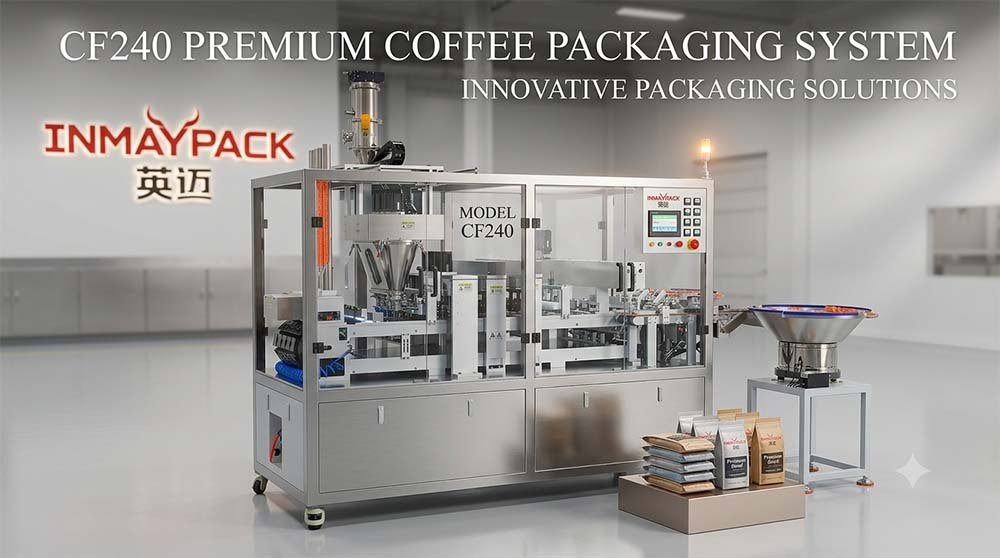
Coffee Capsule Filling and Sealing Machine CF240
Four lanes. One coordinated capsule workflow.
Bring capsule feeding, servo auger dosing, lid placement and heat sealing together. Match your coffee, capsule body and lid before selecting the final production configuration.
- Four-lane configuration
- Servo auger coffee dosing
- Pre-cut lid reference model
- Nitrogen connection
Send your capsule drawing, coffee dose, lid material and required output for a matched proposal.
Validate with your coffee and capsule
Tooling and drawing approval required
The machine at a glance
From ground coffee to a sealed capsule.
The CF240 is a four-lane coffee capsule filling and sealing machine with servo-controlled auger dosing and a pre-cut lid reference configuration. Its technical table lists 120 capsules per minute, capsule outer diameters of 37–54 mm and heights of 28–50 mm.
The right configuration depends on your capsule geometry, coffee flow, target fill weight, lid sealing layer and gas requirements. Confirm these together so the quotation describes the machine you actually need.
Capsule & lid matching
Choose a format. Then confirm the tooling.
Diameter alone does not determine compatibility. The flange, body height, lid material and feeding behavior must work together.
Reference mold route
Nespresso-compatible capsule projects
The reference package describes one Nespresso-compatible mold set. Approve the actual capsule drawing and lid construction for your project before confirming compatibility.
Additional format route
Other cup and capsule geometries
Additional molds can be quoted for suitable formats. Check magazine feeding, machine clearance, dosing position and sealing contact with your samples.
Format names describe the intended capsule route; they do not establish brand authorization or universal brewer compatibility. Compare the K-Cup machine and dedicated Nespresso-compatible machine if those formats are your primary project.
Production decisions
What matters on your capsule line.
01 · Integration
A coordinated filling route
Combine capsule handling, coffee dosing, pre-cut lid placement and sealing in a defined machine scope. Agree the product transfer and downstream handoff before ordering.
02 · Dose control
Coffee-matched dosing
Servo auger dosing is the coffee reference route. Choose the dosing parts and settings around grind, bulk density, fill weight and the behavior of your own coffee.
03 · Configuration
A clear expansion plan
Quote additional tooling, capsule weighing and gas equipment separately. This makes the initial machine configuration and later additions easier to compare.
Working principle
A connected workflow, station by station.
This is the reference process sequence. The final station arrangement and options are defined in your approved machine proposal.
Load capsules
Feed approved empty capsules through the selected magazine arrangement.
Position the bodies
Index capsules into the matched tooling and filling positions.
Supply ground coffee
Transfer coffee to the dosing system using the agreed product feed arrangement.
Dose the coffee
Use servo auger filling with settings established for the target dose.
Apply the gas plan
Set nitrogen supply and flushing requirements for the selected configuration.
Place pre-cut lids
Position the approved lids over clean capsule sealing flanges.
Heat seal
Set temperature, contact and dwell to suit the capsule and lid materials.
Discharge capsules
Transfer sealed capsules to the agreed collection or downstream packing route.
Inside the machine
See the mechanisms behind each finished capsule.
Six detail views help you assess capsule handling, dosing, lid placement, sealing and discharge.
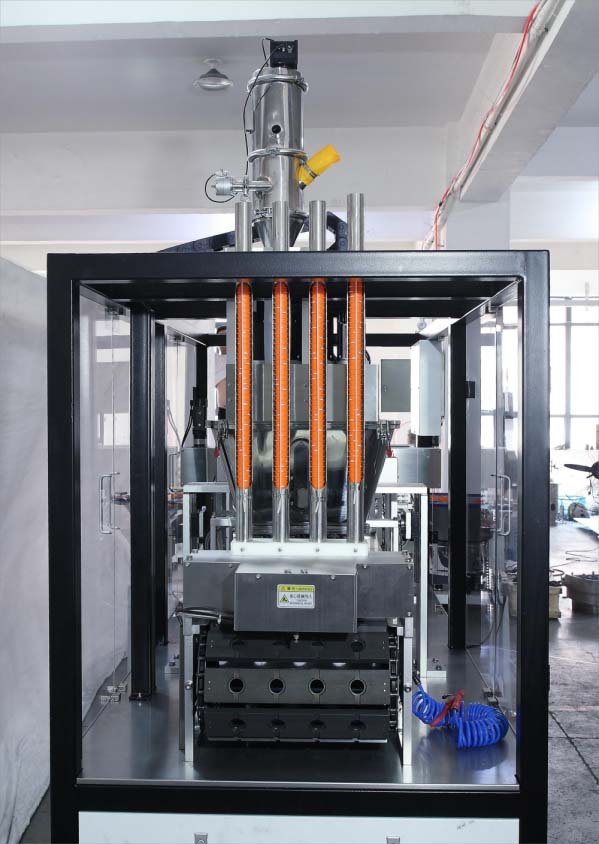
Station detail · 01
Capsule magazine feeding
Check capsule stack height, separation and reliable presentation using your actual empty capsules.
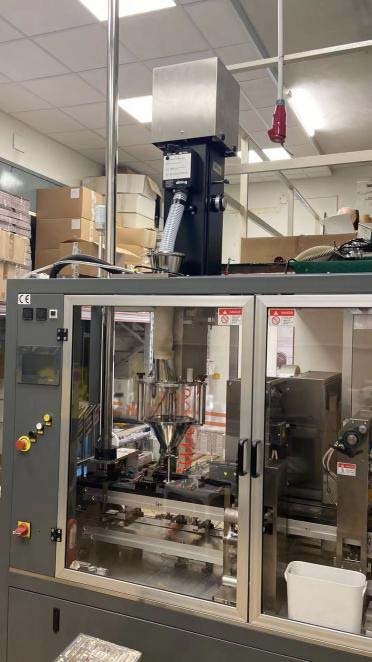
Station detail · 02
Coffee auger filling
Confirm the coffee feed, auger setup, target fill weight and access for product changeovers.
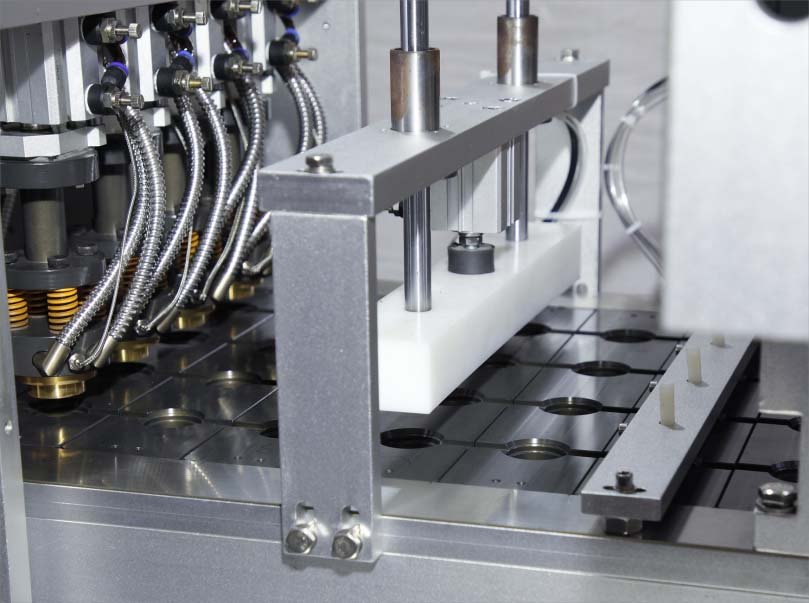
Station detail · 03
Indexed capsule tooling
Match capsule geometry and support points so filling and sealing positions align with the approved format.
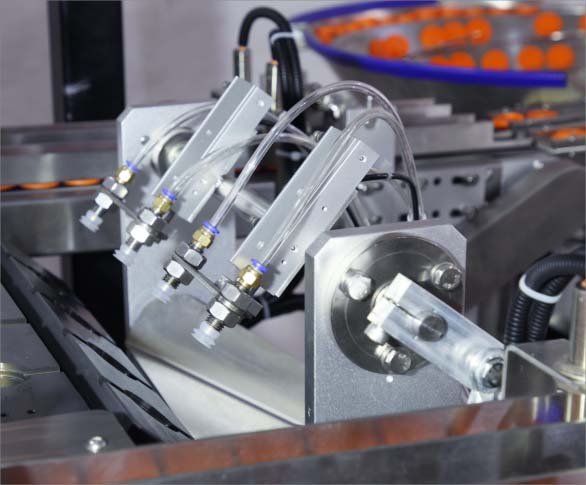
Station detail · 04
Pre-cut lid placement
Check lid separation, orientation and placement with the selected pre-cut lid material.
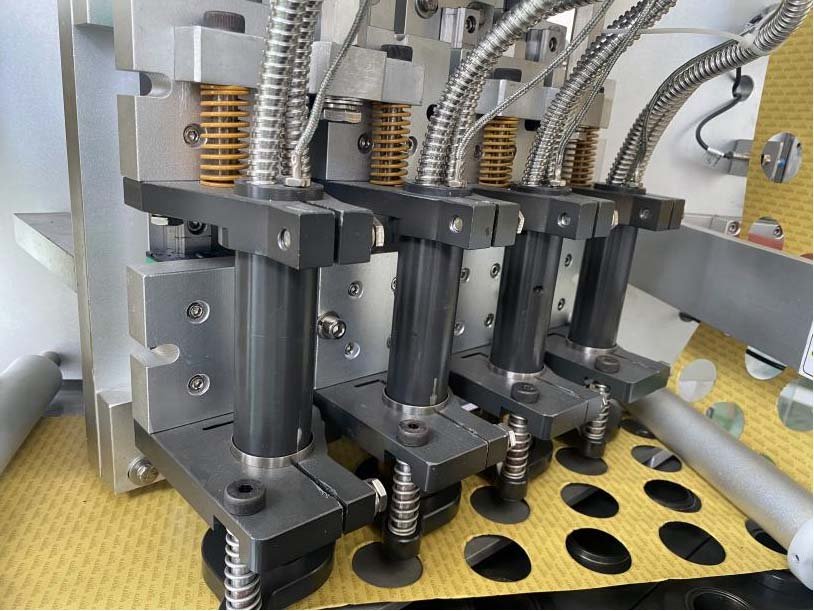
Station detail · 05
Heat sealing assembly
Establish a sealing window for the flange and lid, then inspect seal integrity and opening behavior.
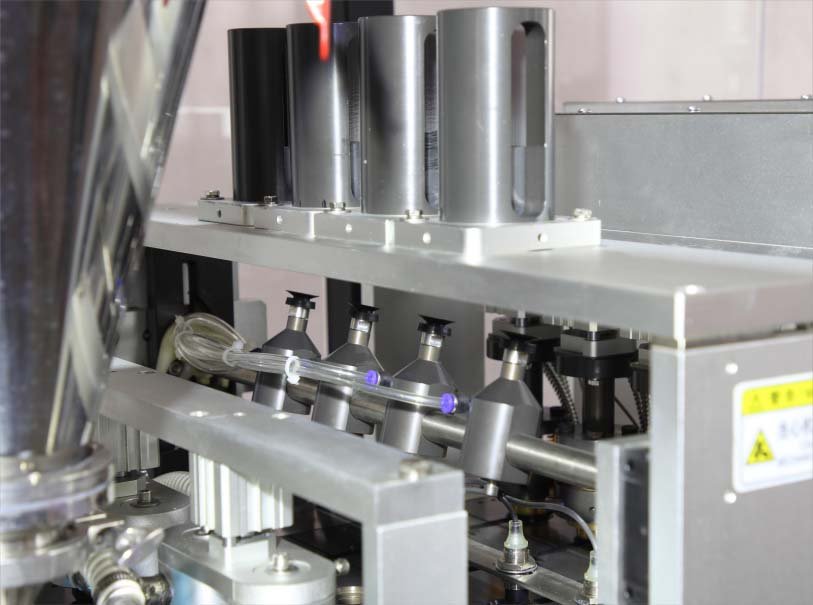
Station detail · 06
Finished capsule discharge
Define collection or downstream transfer. Detection, weighing and rejection functions need their own agreed scope.
Technical reference
CF240 specifications for project planning.
Use these figures to start your selection. The signed configuration and sample test define the project acceptance conditions.
| Item | Reference value | Selection note |
|---|---|---|
| Model / lanes | CF240 / four lines | Reference coffee capsule configuration. |
| Production capacity | 120 capsules/min | Listed actual-capacity reference; confirm accepted output with your coffee, dose and capsule. |
| Capsule outer diameter | 37–54 mm | Subject to capsule drawing, tooling and handling approval. |
| Capsule height | 28–50 mm | Check body geometry, flange and mold support. |
| Lid / film outer diameter | 37–54 mm | Pre-cut lid reference route; approve material and sealing layer. |
| Power supply | Single-phase 220 V | Confirm local frequency and electrical requirements. |
| Main motor / total power | 1.5 kW / 7 kW | Reference configuration; additions may change connected load. |
| Compressed air pressure | 0.6–0.8 MPa | Confirm regulated supply and air quality requirements. |
| Machine dimensions | 3500 × 950 × 1800 mm | Machine reference only; allow access and auxiliary equipment space. |
| Machine weight | 1500 kg | Confirm final configuration and shipping dimensions. |
Dosing, residual oxygen, changeover and utility notes
| Item | Reference statement | What to confirm |
|---|---|---|
| Dosing accuracy | Can reach ±0.1 g | Performance reference, not a blanket guarantee. Agree coffee, target dose, sampling and acceptance limits. |
| Residual oxygen | Can reach about 5% | Reference under nitrogen operation. Confirm gas quality, flow, sampling time and measurement method. This is not a shelf-life guarantee. |
| Mold changeover | About 30 minutes | Reference statement; timing depends on format, parts, adjustments and operator procedure. |
| Air consumption | 0.8 m³/h as listed | Verify the stated unit and demand for the current configuration before sizing the compressor. |
| Noise | <70 dB as listed | Agree measurement location, operating conditions and auxiliary equipment boundary. |
| Controls / components | Schneider, SICK, Omron and AirTAC references | Approve the actual component list, substitutions and support requirements in the proposal. |
120 capsules/min is the technical-table production reference used on this page. Additional product types or liquid filling need a separate dosing, product-contact and cleaning assessment.
Coffee quality & acceptance
Approve the dose. Prove the seal.
A useful capsule test connects filling performance with lid integrity and the gas conditions you intend to use.
Dose consistency
Test the target coffee dose over an agreed run. Record mean weight, variation, startup behavior and the sampling method.
Flange cleanliness
Inspect the sealing area after dosing. Agree dust-control settings and the acceptable level of coffee contamination.
Seal integrity
Evaluate leakage, opening behavior and seal appearance with approved capsule bodies and lids.
Nitrogen results
If gas flushing is selected, measure residual oxygen under agreed test conditions and define any storage validation separately.
Use the coffee capsule machine FAT checklist to prepare your sample run and acceptance records. FAT means factory acceptance testing.
Price & quotation scope
Get a quote for your actual capsule project.
CF240 pricing depends on the capsule tooling, product feed, lid route, weighing, nitrogen equipment and line integration. Request an itemized proposal so each option is clear.
Reference quotation package
Machine & core configuration
- CF240 pre-cut lid reference machine
- Automatic vacuum feeder for coffee transfer
- One Nespresso-compatible reference mold set
- Nitrogen connection entrance
- Dust removal device
Confirm each inclusion in the current quotation. A vacuum feeder conveys coffee; it does not describe vacuum packing of the capsule.
Selected additions
Options matched to your project
- Additional capsule molds and format parts
- Capsule weighing system
- Nitrogen generator and dryer
- Coffee grinder and installation arrangement
- Air compressor
- Flavor injection or vibrator disc equipment
- Cutting-lid device for a separately assessed lid route
Gas and air supply equipment, extra formats and weighing are separate selections unless expressly included.
Prepare these details for a useful proposal
Capsule and lid drawings or samples · coffee grind and bulk density · target dose · required accepted output · voltage and frequency · nitrogen plan · weighing needs · destination and downstream packing route.
Beyond the machine
Plan the handoff to secondary packaging.
Upstream
Coffee supply
Define the upstream grinding, product holding and conveying arrangement. Assess coffee freshness, material flow and cleaning access with the proposed feed system.
Installation
Utilities & access
Confirm electrical supply, compressor demand and nitrogen equipment. Allow space for refilling, cleaning, service and removal of format parts.
Downstream
Finished capsule packing
Define counting, collection and cartoning separately. Review the coffee automatic cartoning machine and coffee packaging machine range for the rest of your project.
What should the factory acceptance test cover?
- Run the approved coffee, capsule bodies and lids together.
- Record accepted output over an agreed duration, including rejects and stoppages.
- Sample fill weights and inspect sealed capsule integrity.
- Measure residual oxygen if nitrogen performance is in scope.
- Verify selected alarms, rejection triggers and overload-stop behavior.
- Record changeover tasks, cleaning access and downstream transfer.
- Confirm manuals, training, spare parts and support scope in the agreement.
Questions before you order
Coffee capsule machine FAQ.
What is the CF240 coffee capsule filling and sealing machine?
What production speed should I use for planning?
Which capsule sizes are listed?
Can it fill Nespresso-compatible or K-Cup capsules?
Is ±0.1 g accuracy guaranteed for every coffee?
Does CF240 include a nitrogen generator?
What does the residual oxygen reference mean?
Does the reference machine use pre-cut lids or roll film?
Are capsule weighing and automatic rejection included?
What electrical supply and compressed air are listed?
Can CF240 fill products other than ground coffee?
How do I get a CF240 price and delivery proposal?
Build your capsule project
Send your capsule. Get a matched CF240 proposal.
Share your coffee dose, capsule drawing, lid material and output target. We can define the tooling, machine configuration and options for your inquiry.