Volume can change after handling
Record the supplied state and the state after conveying or agitation so dose repeatability is not judged from an unrelated bulk-density assumption.
Packaging systems configured around your application Defined project scope

Review the flour. Control the dose. Protect the seal.
Select a flour filling and packaging route by product aeration, bulk-density variation, dust, dose, finished pack and acceptance method—not by an empty-cycle speed alone.
Start with your flour, fill weight, package drawing and required output. Samples and material details can follow during the review.
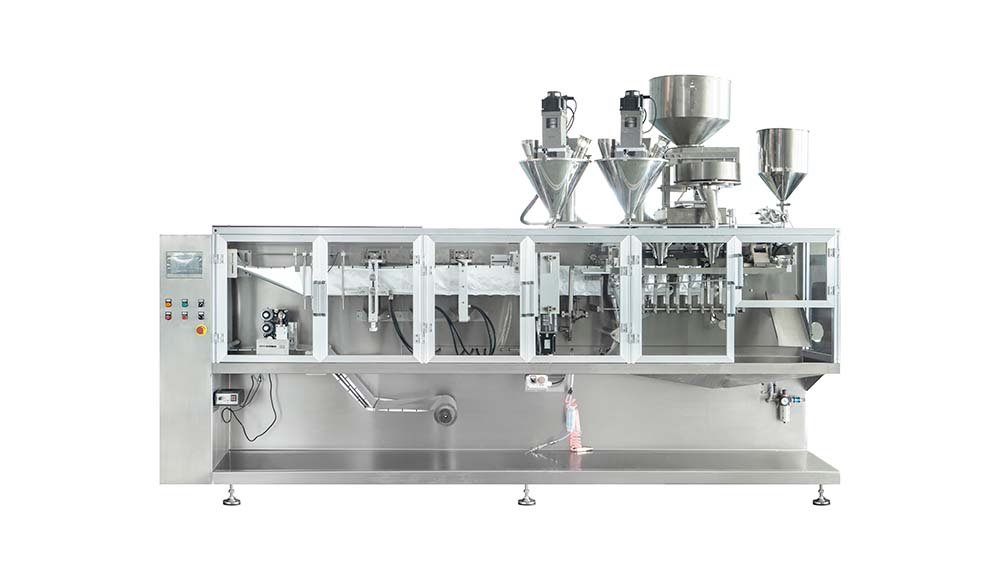
The dosing system must control the actual flour, while the packaging platform must form or handle the selected sachet or pouch and keep flour away from the seal. A useful quotation therefore fixes the product sample, dose, pack drawing, material, test duration and accepted output together.
Two flours with the same label can dose differently after transport, storage, feeding and agitation. These conditions change the filler setup and the package acceptance test.
Flour name alone does not approve the dosing principle. Use the auger versus weigh filler trial method to compare flow, aeration, dust, refill and accepted finished packs.
Record the supplied state and the state after conveying or agitation so dose repeatability is not judged from an unrelated bulk-density assumption.
Hopper geometry, agitation, refill control and auger tooling must be reviewed with the real flour and the intended operating sequence.
A fast dose is not an accepted pack if airborne or falling flour contaminates the sealing area, coding zone or downstream inspection.
Identify each flour SKU separately and retain its batch and supplied condition. If the line will handle wheat flour, rice flour or a formulated flour blend, submit the relevant samples instead of treating one powder test as approval for the entire range. These are sample categories for review, not a statement that one configuration handles every flour.
A package that appears full immediately after dosing still needs a defined net-weight and sealing check. Agree when pack appearance is assessed so an aerated sample and a settled sample are not judged against different expectations. For flour with fine-powder handling concerns, review the fine powder filling configuration alongside the actual feed, refill and seal checks.
The correct architecture depends on how the package is supplied and formed. These routes should not be compared as though they were one universal machine.
Review film web, sachet drawing, lane count, auger access, cutoff, dust collection interface and seal cleanliness as one system.
Review the powder sachet routeWhen the machine forms a compatible pouch from roll film, dosing, forming, opening access, fill control and sealing must remain synchronized.
Compare roll-film doypack systemsPouch pickup and opening must be verified alongside auger dosing, headspace, dust near the mouth and final sealing.
Compare premade pouch systemsScope boundary: this page covers flexible sachet and pouch projects. Open-mouth sacks, valve bags, bulk bags, retail cartons, jars and other container systems require a separate equipment review.
| Candidate route | Inputs to freeze | Trial that matters |
|---|---|---|
| Flat flour sachet | Finished width and length, dose, seal layout, film web and filling opening. | Show the auger discharge entering the sachet, then inspect the final seal after a representative refill event. |
| Roll-film stand-up pouch | Pouch drawing, forming geometry, material, opening access and required closure. | Run forming, filling and sealing together; a satisfactory isolated dose does not approve the pouch-making sequence. |
| Premade flour pouch | Production pouches, usable opening, fill access, headspace and top-seal area. | Record pickup, opening, filling and sealing with the supplied pouch rather than an easier substitute. |
For the roll-film flat-sachet option, the HS-180 platform reference documents three-side or four-side sealing and a servo-auger powder configuration. Its reference powder is baking soda. It establishes a candidate architecture, not a demonstrated flour output or accuracy claim; your flour and package still need a representative trial.
The selected filler can only perform consistently when product supply, refill behavior, package presentation, sealing and discharge are defined around it.
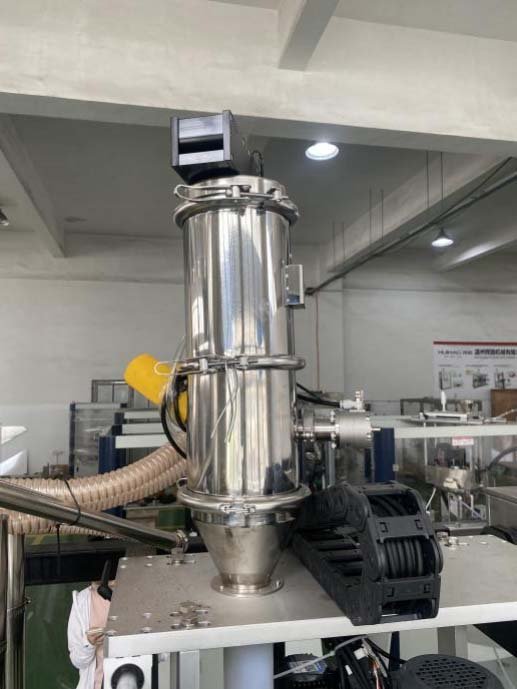
Ask for a line-item scope that connects the flour supply to an accepted finished package. An auger price alone leaves the buyer unable to compare a complete filling and packaging system.
| Scope item | Define in the quotation | Evidence or responsibility |
|---|---|---|
| Dosing assembly | Hopper, auger tooling, agitation if required, cutoff, recipe range and removal access. | Identify the tested flour, dose range and supplied change parts. |
| Flour replenishment | Manual loading or a specified transfer system, level signals and refill sequence. | Name the supplier of each connection and demonstrate the agreed refill condition. |
| Packaging platform | Roll-film or premade-pouch route, approved pack range, sealing and discharge. | Attach the controlled drawing and list tooling for each approved SKU. |
| Dust and inspection | Extraction interface, coding, weight inspection, rejection and collection when required. | State what is included, optional or buyer-supplied; define rejection and seal checks. |
| Handover | Utilities, layout, manuals, settings, training, spares and test documentation. | Agree delivery responsibility and open-item ownership in the current proposal. |
For dosing-component selection, review the integrated auger filling configuration. Keep component capability separate from the accepted output of the whole flour line. The packaging platform, refill system and inspection sequence must support the same operating basis.
| Input | What to provide | Decision it changes |
|---|---|---|
| Flour sample | Type, supplied condition, storage, temperature, moisture context and a representative test quantity. | Feed, agitation, auger tooling, cutoff and test basis. |
| Dose and tolerance | Nominal dose, allowed range and how accepted weight will be measured. | Filler size, tooling, control method and inspection. |
| Package | Controlled drawing, material structure, dimensions, headspace, seal geometry and coding area. | Machine route, forming parts, pouch handling and sealing. |
| Dust and cleaning | Expected dust, extraction interface, product-contact boundary, changeover and verification method. | Enclosure, access, removable parts and sanitation plan. |
| Accepted output | Saleable packs per minute, test duration, allowed rejects, refill assumption and downstream state. | Commercial comparison and FAT acceptance criteria. |
| Line interfaces | Upstream supply, utilities, coding, inspection, reject handling, conveyors and secondary packaging. | Controls, layout, signals and responsibility split. |
Agree the flour sample, pack material, format, dose and line state before comparing results.
Include the planned product supply and hopper-refill sequence instead of testing only an isolated dose.
Check weight method, seal cleanliness, cut, code, appearance, leaks and defined rejects.
Retain settings, test duration, samples, results, deviations and responsibilities for the approved configuration.
Use the packaging machine FAT checklist to assign samples, responsibilities, pass criteria and evidence before the test begins.
Agree the weighing method, tare treatment, sampling sequence and acceptance limits before the run. Retain individual results from startup, steady running and normal refill periods, with the corresponding recipe and sample identity. A single average can hide individual packs outside the agreed limits.
For the package record, retain samples or close-up views showing the seal area, cut, coding and appearance. Record rejected packs and the reason for rejection. Calculate accepted output from the accepted-pack count divided by the agreed elapsed test time, with planned stops and excluded periods stated explicitly.
Separate a dose adjustment from a product change and a package-format change. Each can require different tooling, settings, cleaning work and first-pack checks. A quotation should identify which changes are covered by the supplied equipment.
If a project needs separation between allergen profiles or a specific product claim, the buyer's quality team must define and verify the release method. The machine name, stainless-steel appearance or a quick visible cleanout is not evidence that the required changeover has been validated.
Share the flour sample, dose, package drawing, material, accepted-output basis, cleaning requirement and line interfaces. INMAYPACK will compare the suitable flexible-package routes before recommending a configuration.
Request a Flour Line Review