Choose a checkweigher for a pouch packaging line by testing the complete path: the filled pouch must arrive in a weighable condition, receive a valid weight decision and reach the correct accepted or rejected outlet. A scale specification alone does not demonstrate that this path works with your bags.
This guide is for buyers specifying inspection after filling and sealing, including small sachets, individual stick packs and premade pouches. It focuses on the handoff between the packaging machine and downstream equipment. The acceptance sheet below is a proposed purchasing framework, not a report of a completed INMAYPACK checkweigher installation or a claim that a particular inspection module is included.
Define what the checkweigher must decide
An inline or dynamic checkweigher measures packs as they move through an inspection station. Decide whether the purchasing task is checking individual sealed packs, supporting fill-process control, or checking the completeness of an outer package. These are different acceptance tasks, even if weight is used in each.
Write the inspected unit into the request: one separated stick, one connected strip, one retail pouch or one filled carton. State which seals, labels, spouts, caps and secondary packaging are present at that point. A line drawing should identify the inspection position and the next process that will receive accepted packs.
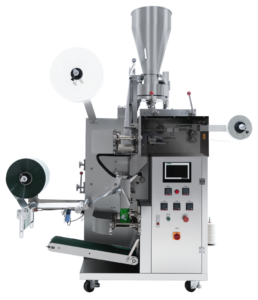
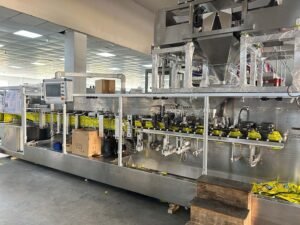
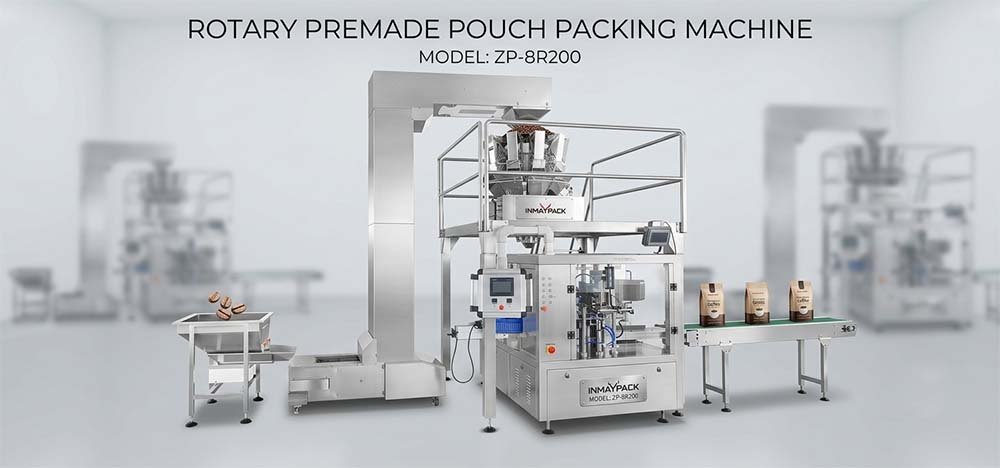
For the upstream machine, use the appropriate premade pouch machine route or stick pack machine range. Keep the inspection supplier's scope separately identifiable. Do not assume that a dosing weigher above a packing machine performs the same job as an independent check of the finished bag.
If the requirement is the correct number of sticks in a carton, continue with the stick pack counting and cartoning guide. Do not replace a demonstrated counting method with an assumed relationship between carton weight and piece count.
Specify the arriving pouch, not just the belt speed
METTLER TOLEDO's checkweighing guidance identifies package movement, transfer disturbance and product spacing as factors in dynamic weighing. For a conventional single-product weigh conveyor, the pack must be alone on the weighing section during measurement. It also notes that contact with guide rails during weighing can affect the result. These are reasons to review the actual pouch path before choosing equipment.
Ask for a trial using your sealed packs in the proposed orientation. Include the smallest and largest pack formats and the product conditions that change their shape. Record whether a pouch arrives flat, upright, rotated or unsettled, and whether the proposed transfer requires a change of orientation. Specify responsibility for any separation or handling equipment between the packer and inspection station.
- 1. AdmitIdentify one inspection unit and its arrival condition.
- 2. MeasureLink a valid weight result to that same unit.
- 3. RouteCarry the decision to the physical divert point.
- 4. ConfirmRecord the actual outlet and any unresolved pack.
Use the specification table to request a layout-specific answer. “Compatible with pouches” is not an answer to each row. The supplier should identify what is included in its proposal, what depends on upstream equipment and what still needs a pack trial.
On a small screen, focus the table and scroll sideways to read all columns.
| Input to provide | Question for the proposed arrangement | Evidence to request |
|---|---|---|
| Finished pack envelope | What pack length, width, height and orientation will be admitted? | Actual samples, drawing revision and the supported transfer path. |
| Arrival pattern | What happens to close pairs, overlapping packs or simultaneous lane discharge? | A defined separation or multi-lane arrangement, tested with the proposed feed. |
| Transfer and support | Where does the pouch change support, speed or direction? | Layout review and observations at each transfer, including flexible edges. |
| Operating window | Which recipes, output rates and operating states are covered? | Trials at agreed conditions, not only a selected steady run. |
| Environment | What vibration, airflow, product movement and cleaning conditions must be assessed? | Installation requirements and a record of the actual trial environment. |
| Downstream availability | What happens when the next conveyor or cartoner cannot accept another pouch? | Agreed hold, stop and restart behavior with ownership assigned. |
Procurement note: ask suppliers to mark the limits of their responsibility on the same line drawing. An inspection module offered without the equipment needed to present your pouches is not equivalent to a complete inspection interface.
Agree the weight decision and its limits
Separate the displayed pack weight, the product quantity you intend to control and the rule that classifies a pack. State whether the result is gross mass or a net estimate, how tare is established, and who approves the decision limits. Include the relevant packaging revision: a change in the pouch, cap or label must not silently inherit an unsuitable recipe.
For the underlying measurement and fill-trial questions, use the liquid pouch filling accuracy guide. This page adds a different requirement: the recorded decision must remain associated with the correct physical pouch through inspection and diversion.
Ask the inspection supplier to distinguish a stationary reference check from an in-motion test with actual packs. Request the proposed measurement method, the reference instrument's suitability, the working conditions and the repeatability assessment. Do not turn display resolution into an assumed acceptance tolerance.
For packs close to a decision boundary, agree how measurement uncertainty will be addressed and how repeated or ambiguous results are recorded. An unread pack, a double presentation or an unstable result needs an explicit disposition. Do not quietly classify these events as accepted merely because there is no recorded underweight result.
Net-content compliance is a separate quality and regulatory responsibility. NIST Handbook 133 provides procedures for checking the net contents of packaged goods. The responsible quality team should identify the applicable market requirements and test procedure; this guide does not supply a universal legal tolerance or replace a compliance assessment.
Verify where each rejected pouch actually goes
Define three separate events in the quotation and test record: a weight classification, a reject command and confirmed removal. A controller output is not, by itself, a record of which pouch arrived in the reject collection area. Ask the supplier how these events are associated when the belt changes speed, packs arrive close together or production pauses.
Specify the physical destination of rejected packs and who controls their release, disposal or rework. Identify any route by which a rejected pouch could rejoin accepted output. Ask whether the proposed collection arrangement needs bin-present, full-bin or other monitoring, and what happens when the agreed removal confirmation is absent.
Select a reject arrangement through a sample demonstration rather than by its name. Ask to observe pouch condition after diversion, the effect on the following conforming pouch and the handling of consecutive rejected packs. Record any pack that remains between the measurement point and the divert point when a stop occurs.
The packaging system integration checklist covers the wider controls and responsibility review. Production handshakes and protective safety functions must remain distinct. Fault simulations belong in an approved, guarded test procedure carried out by competent personnel, not improvised changes to safety circuits.
Weight inspection also has a defined scope. LOMA's combination inspection systems combine weighing with other inspection technologies; that does not make a standalone weight check a metal-contamination, seal-leak or label inspection. Specify those duties separately when the product risk requires them.
If the inspection duty includes foreign-body detection, use the metal detection vs X-ray guide for food pouches to compare product and laminate compatibility before agreeing the sample trial. Keep that capability decision separate from the weight result, while assigning responsibility for each pack's final destination.
Build a paired acceptance record for the pouch and its destination
Use a common sample identifier to join two records: the weight evidence and the physical routing evidence. This is a purchasing template to adapt with the suppliers and quality team. It is not a claim that the test has been completed, and it supplies no fixed pass rate, sample size or machine performance guarantee.
Before the trial, agree each sample's reference status, intended route and acceptance rule. Include conforming packs as well as approved underweight and overweight challenges. Define the treatment of boundary samples before interpreting their results. If a test pouch is recirculated, identify each pass separately and confirm that handling has not changed the sample.
| Challenge condition | Weight-side record | Physical-outlet record |
|---|---|---|
| Conforming pack | Sample ID, reference status, measured result and classification. | The same pack reaches accepted output without an unexplained diversion. |
| Agreed off-weight pack | The challenged condition and the classification returned. | The identified pack is removed and its actual destination recorded. |
| Consecutive challenges | A separate result or explicit invalid status for each admitted pack. | Each target pack is accounted for; the following conforming pack is also checked. |
| Close pair or overlap | The agreed presentation-fault response, rather than an assumed valid single-pack reading. | The final disposition of both packs, including any held material. |
| Stop between weighing and diversion | Last confirmed result, pending identities and restart state. | The location and final disposition of every challenged pack still inside the boundary. |
| Unavailable reject path | The safely simulated condition and recorded system response. | Evidence of the agreed containment and recovery procedure. |
| Recipe or format change | Recipe revision, pack specification, limits and verification status. | A new challenge sequence showing that the selected route remains associated correctly. |
Retain the settings, run conditions, raw readings, classification, reject confirmation, actual outlet and any operator intervention on one review sheet. A video can help explain a transfer problem, but the sample and pass identifiers should still connect it to the written record.
Review weight errors and routing errors separately. A correctly identified off-weight pack at the accepted outlet indicates a different failure from a conforming pack incorrectly classified as off-weight. An unaccounted sample is an unresolved test result, not a convenient exclusion from the report.
Acceptance decision: require the proposed arrangement to explain every challenge pack's result and destination. If a run ends with an unidentified pack or an unexplained outlet mismatch, record the issue and the corrective-action/retest responsibility before agreeing that the interface is accepted.
Compare quotations using the same inspection scope
Request separate scope lines for pack presentation, infeed transfer, weighing, rejection, confirmation, collection, controls, records and integrated testing. Mark each as included, optional, supplied by another party or unresolved. A lower equipment price is not a like-for-like comparison when essential handling or confirmation functions sit outside that offer.
- Equipment and interface: identify the proposed model/configuration, physical boundaries, utilities and responsibility for upstream and downstream changes.
- Verification and acceptance: identify who provides packs and reference equipment, runs the agreed tests, keeps the records and closes failed challenges.
- Data and recipes: agree which results are retained, how a batch and recipe are identified, who may change limits and how records are retrieved. Do not assume that software or an export license is included.
- Cleaning and maintenance: agree access, removal of product residues and replacement-part responsibilities. Use the existing hygienic design checklist for the cleaning boundary, without assuming a particular washdown rating.
- Handover: request the approved layout, recipe list, operating instructions, test report, outstanding items and configuration-specific support terms.
If automatic feedback to a filler is proposed, make it a separate review item. Ask which measurement drives adjustment, how it is associated with the upstream dose and what prevents invalid or delayed readings from being used. Do not treat feedback as a substitute for a suitable filling process or an accepted inspection arrangement.
Questions buyers ask about pouch checkweighers
Can one checkweigher handle sachets, stick packs and stand-up pouches?
Do not assume interchangeability from the format names. Ask for a defined pack range, orientation, feed arrangement and recipe-change procedure, followed by trials using the packs you intend to run. A shared module may still require different presentation equipment or settings.
Does a multihead weigher replace a finished-pouch checkweigher?
No. Upstream dosing and checking a finished pack are different tasks. Specify which quantity is measured at each stage and what happens between them. The purchasing scope should make clear whether independent finished-pack inspection is required and who supplies it.
What checkweigher accuracy should I request?
Start with the product, pack range, target quantity, decision limits and operating conditions. Ask the supplier to demonstrate measurement capability for that requirement. There is no defensible universal accuracy figure for every pouch, speed and installation.
Is a reject counter enough to prove that off-weight packs were removed?
First establish what the counter counts: classifications, commands or confirmed physical removals. During acceptance, compare those records with the identified challenge packs and their actual destinations. Investigate any mismatch instead of treating all counter types as equivalent.
Should I order a standalone checkweigher or include it in the line quotation?
Either purchasing route needs a named owner for the complete interface. Compare the same transfer, inspection, reject, controls and acceptance scope. Confirm supplier boundaries explicitly; a general packaging-line quotation does not establish that a checkweigher is included.
Prepare a pouch-line inspection review
Share your finished pack drawing or samples, product, target fill, required output, discharge arrangement and inspection duty. Include an existing layout and your acceptance requirements where available. Ask INMAYPACK to review the packaging-machine handoff and define the proposed project boundary; inspection equipment, integration and support remain subject to the agreed configuration and quotation.