
Powder dosing · integrated packaging systems
Auger Filling Machine for Powder Packaging
Match the auger, hopper and filling path to your powder and dose. INMAYPACK integrates auger filling with sachet, stick-pack, premade-pouch and selected coffee-capsule systems, with equipment selection based on your product and finished pack.
Start with your powder, target fill weight, package and output. Send the details you have; samples and drawings can follow.
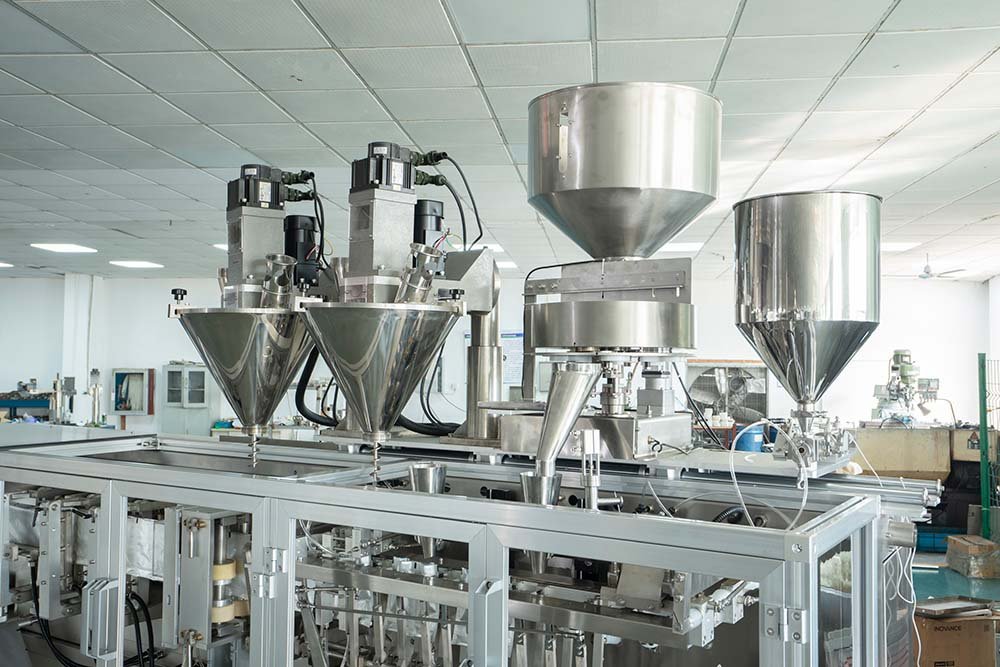
Equipment-family reference; the selected filler and station count follow your project.
Quick answer
What does an auger filling machine do?
An auger filling machine meters powder through a rotating screw. The screw and tube, hopper condition, drive settings, refill and cutoff determine how the portion is delivered into the package.
Choose this page for auger dosing integrated with flexible-packaging and selected coffee-capsule systems. Bottle, jar, can and bulk-bag filling require a separate equipment review.
Start with the application: choose the powder, dose and pack, then review the tooling and a sample trial. Use finished-pack output and cleaning requirements to complete the equipment selection.
Choose your next detail
From powder behavior to the finished pouch.
Fine or dusty powder?
Explore powder supply, auger selection, dose verification and extraction around the filling point.
View Fine Powder Filling Machines Pouch handling & sealingFilling supplied premade bags?
Review the auger together with pouch opening, product delivery, top preparation and sealing.
View Powder Pouch Filling MachinesMetering sequence
Six linked functions define the filling result
The screw is only one part of the dosing system. A useful machine review follows the powder from replenishment through verification and records where variation can enter.
Powder replenishment
Define how powder reaches the hopper, the refill level or timing and whether the transfer method aerates, compacts or separates the product.
Condition control
Review hopper geometry, agitation and bridging or rat-holing risk so the auger receives a repeatable product condition.
Auger metering
Match screw and tube geometry, drive control and recipe settings to the approved powder and dose range.
Cutoff and discharge
Control dribble, dust and product fall so the measured powder enters the pack without disturbing its opening or seal area.
Package handoff
Coordinate filler timing with roll-film indexing, lane architecture, premade-pouch presentation or capsule transport.
Verification
Agree how samples, checks, rejects and refill periods are recorded so the result reflects accepted finished packs.
Packaging routes
Integrate the filler with the right package architecture
Choose the package route alongside the filler. Bag dimensions, opening, lane layout and sealing influence how powder dosing is integrated.
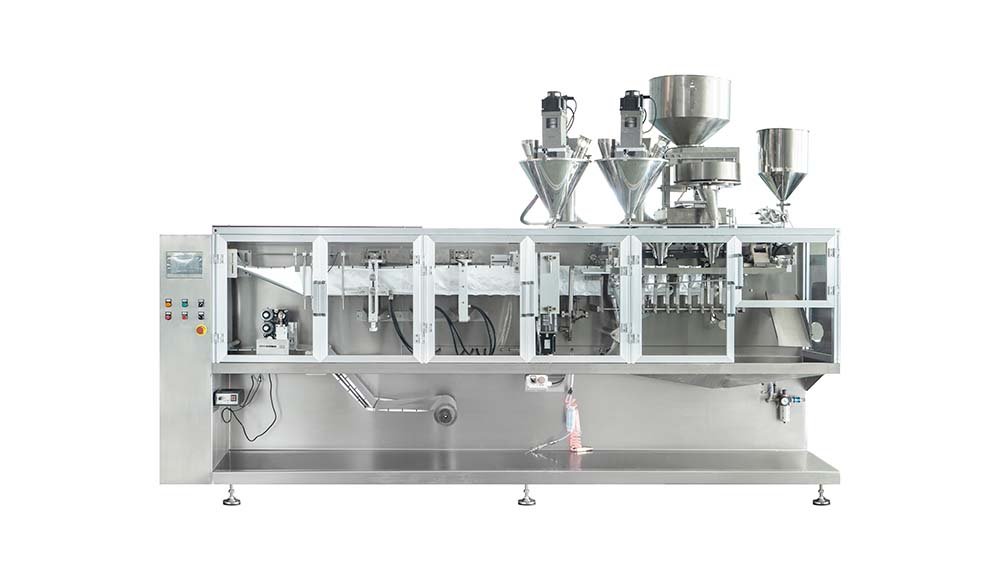
Single-lane powder sachets
Combine the selected auger with flat-sachet forming, filling and sealing. Review the dose, film, bag size and seal-area conditions.
Review Powder Sachet Machines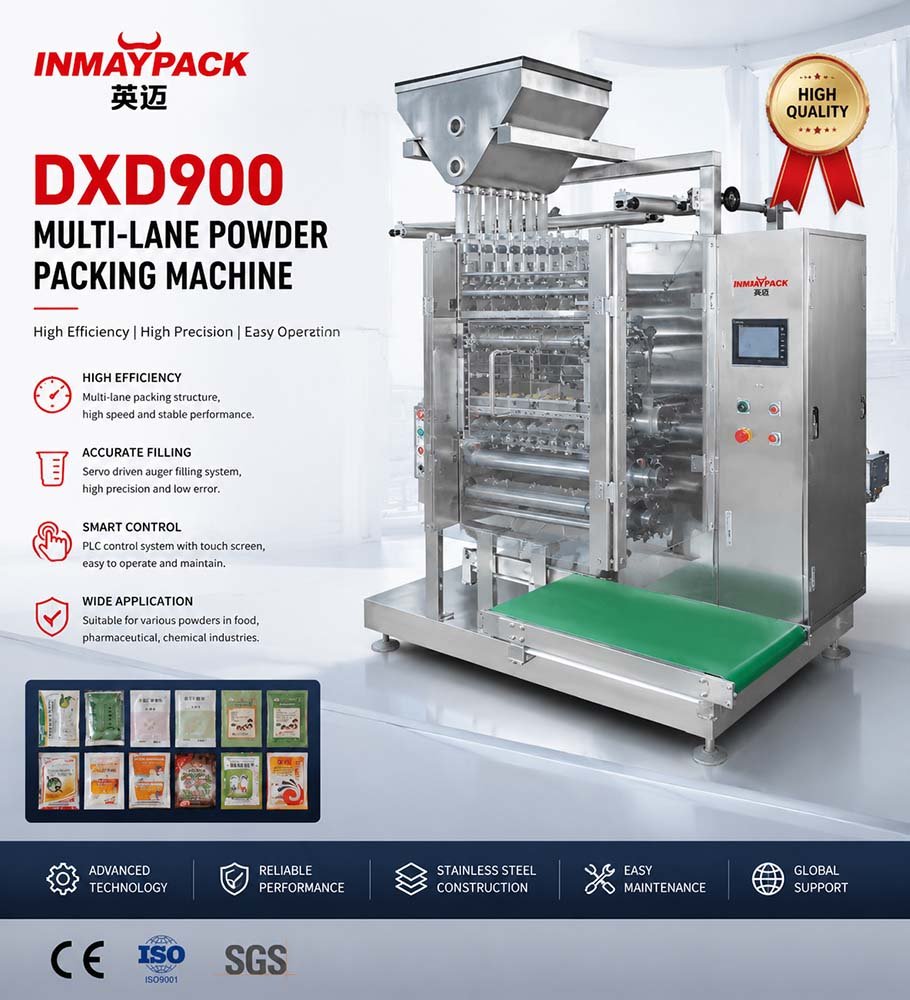
Multi-lane powder sachets
Compare lane layout, powder dosing and web registration for multiple sachets per cycle. Narrow stick packs use a separately selected machine route.
Compare Multi-Lane Sachet Machines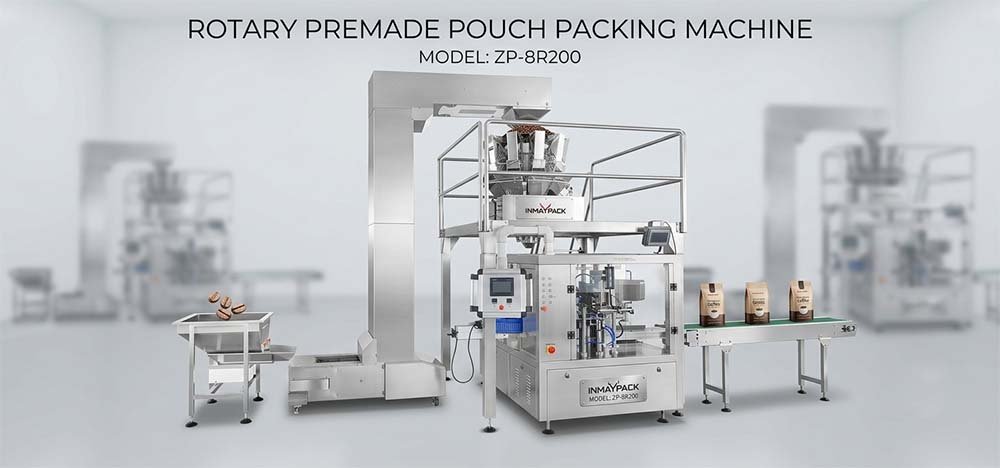
Premade powder pouches
Coordinate the powder filler with supplied-pouch opening, filling and sealing. Select the auger and accessories for your powder and bag.
Review Powder Pouch Filling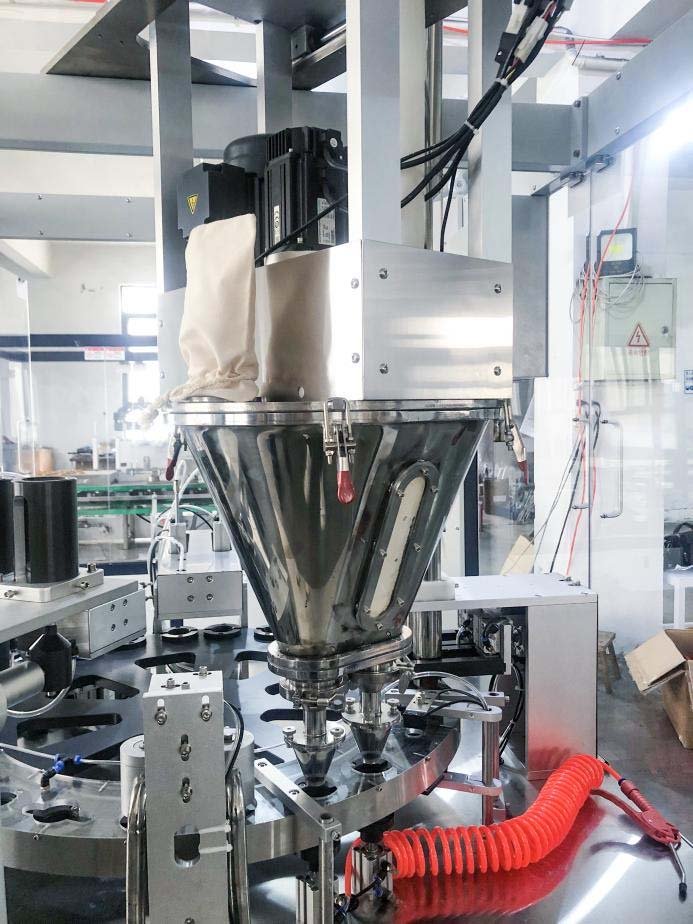
Coffee capsule dosing
Match coffee dosing to the approved capsule and lid. Review the filling path, rim cleanliness, transport and sealing sequence.
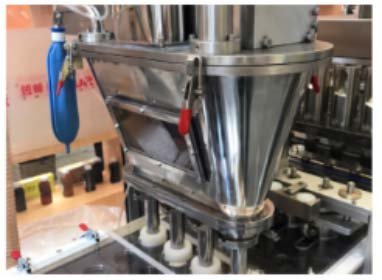
Compare Coffee Capsule SystemsPhotos show machine or component references. Powder tooling and accessories are selected for your application. Compare stick-pack systems for narrow portions, or the rotary pouch platform for bag handling.
Powder behavior
Match the tooling to the powder you run
Bulk density and aeration
Record how the powder arrives, settles and changes after refill. A stable test condition matters as much as the nominal dose.
Flow and compaction
Observe bridging, rat-holing, compaction and sensitivity to agitation because they affect product presentation to the screw.
Dust and dribble
Define cutoff, extraction and pack-mouth protection around the real filling height and packaging cycle.
Particle damage or separation
For blended or fragile products, inspect segregation and product condition instead of checking fill weight alone.
Engineering insight
Check the dose through refill and restart
Include hopper refill, continuous running and planned stops in the sample trial. These operating events help establish the settings, change parts and output suitable for your product.
Equipment details
Review the product path and access points.
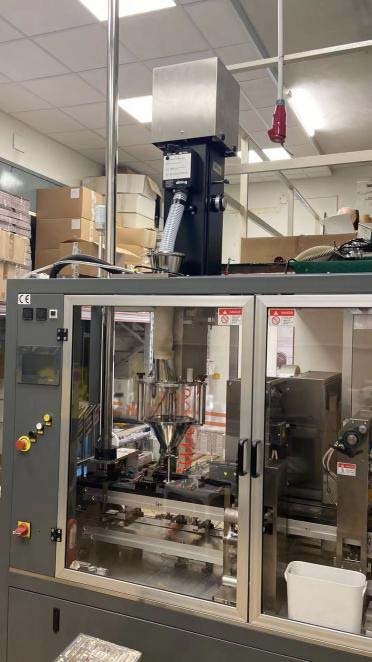
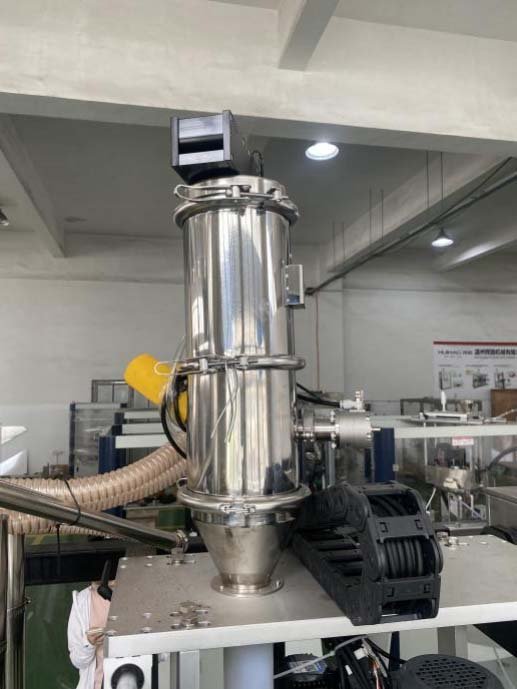
Have a powder or package sample ready? Send the dose and required output to start the equipment review.
Request My Auger ConfigurationSee the equipment in operation
Watch auger dosing inside a complete pouch sequence
Watch powder dosing and pouch handling in this INMAYPACK horizontal packaging configuration. Use the footage to discuss the product path and station sequence for your project.
Ask for a trial using your powder and packaging materials to establish the selected settings and accepted output.
For your production: agree product samples, package materials and the factory acceptance test before final equipment approval.
Selection matrix
Match powder conditions to the filling setup
Use these questions to prepare the sample trial and identify the tooling, handling and cleaning requirements that affect your configuration.
| Observed condition | Configuration question | Acceptance evidence |
|---|---|---|
| Fine or dusty powder | How will cutoff, extraction, nozzle position and package-mouth protection be controlled? | Seal-area inspection, visible dust condition, rejects and accepted packs over the agreed run. |
| Aerated or settling powder | What product-conditioning and refill method will keep the test basis repeatable? | Weight checks at defined times, headspace condition and sample handling method. |
| Cohesive powder that bridges | Which hopper geometry and agitation method present product consistently to the auger? | Refill recovery, low-level behavior, dose checks and evidence of uninterrupted product feed. |
| Recipe or dose changes | Which auger, tube, hopper parts and settings change across the approved SKU range? | Documented change parts, changeover method, restart checks and first-off approval. |
| Blended or fragile product | Can transfer, agitation and screw action change the mix or damage visible components? | Finished-product inspection and comparison with the approved input sample. |
| Hygiene or allergen boundary | What must be removed, accessed, cleaned, inspected and documented between products? | Approved cleaning method, access review and defined release check before restart. |
Changeover and integration
Price the product path and packaging handoff together
An automatic auger filling machine is not complete when the screw turns. The quotation boundary should show powder transfer, hopper control, dosing tooling, machine timing, pack handling, sealing, inspection, discharge and the controls that connect them.
- Powder transfer source, hopper level control and refill method
- Auger, tube, agitation and removable product-contact parts
- Nozzle access, filling height, cutoff and dust-management boundary
- Recipe range, change parts, access and changeover verification
- Package-present, no-package/no-fill and fault-handshake logic
- Checkweighing or sample checks, rejects and accepted-output calculation
- Utilities, guarding, coding, collection and downstream interface
For broader line scope: use the turnkey packaging solutions page when the auger filler must connect to transfer, inspection, conveyors, cartoning or other equipment beyond the primary packaging machine.
For alternative dosing routes: use the powder filling machine systems guide when the product may be better evaluated with weighing or volumetric dosing rather than an auger. When the dosing principle is still open, compare auger and weigh-based powder filling under the same product, refill, package and acceptance basis before approving the commercial machine route.
FAT and accepted output
Compare finished packs under one agreed test basis
Empty-cycle speed and a short filling demonstration do not describe saleable output. Every quotation should state the conditions used for the number being compared.
| Test item | Define before FAT | Record during the run |
|---|---|---|
| Product | Approved powder, condition, batch, quantity and refill method. | Start condition, refill events, visible flow changes and remaining material. |
| Dose | Nominal value, sample method, timing and accepted variation basis. | Results in sequence, not only selected good samples. |
| Package | Drawing, material, dimensions, opening and sealing requirements. | Fill condition, headspace, powder at the seal, seal result and finished appearance. |
| Output | Run duration, staffing, planned stops, rejects and downstream boundary. | Total packs, accepted packs, reasons for rejection, stops and recovery time. |
| Changeover | SKUs, parts, cleaning boundary, tools and first-off release criteria. | Elapsed steps, access issues, settings restored and first accepted pack. |
| Evidence | Data sheets, check records, sample retention and required video views. | Complete record tied to the tested product, machine and configuration. |
Auger filling machine price
Get a quote for your powder and package.
Price depends on the dosing module, packaging platform and selected line equipment. Request an itemized proposal so the included components and project services are clear.
Auger & product path
Selected screw and tube, hopper, drive and controls, product supply and change parts for the approved doses.
Packaging & inspection
Bag forming or pouch handling, filler timing, sealing, selected coding, weight checks and reject handling.
Trial & project support
Sample trial, factory acceptance scope, utilities, installation, operator training and the agreed spare-parts list.
Start your quotation
Tell us the essentials. Refine the setup together.
Begin with the product, target weight, package type and required output. Include photos or samples when available. Detailed cleaning and line-interface requirements can be added during the review.
Four details to start
- Your powder and any flow or dust concerns
- Target fill weight and planned dose sizes
- Sachet, stick, pouch or capsule format
- Required finished-pack output and destination
Buyer questions
Auger filling machine FAQ
Which powders are suitable for an auger filling machine?
Auger fillers are often evaluated for fine, cohesive or non-free-flowing powders, but suitability cannot be confirmed from the product name alone. Flow, aeration, dust, compaction, particle condition, bulk-density change, dose and package handoff should be tested with a representative sample.
What determines auger filling accuracy?
The result depends on powder condition, consistent presentation to the screw, auger and tube geometry, drive control, refill behavior, cutoff, sample timing and the verification method. Accuracy should be defined for the approved product, dose, tooling and test basis rather than stated as one universal machine number.
Can one auger filler handle several powders and dose sizes?
Possibly within an approved project range. Different products or doses may require recipe changes, auger and tube changes, hopper adjustments, cleaning and a new first-off check. Send the priority SKU list so the shared operating window and required change parts can be evaluated.
Is an auger filler the same as a complete powder packing machine?
No. The auger meters the powder. A complete system must also transfer and condition the product, form or present the package, coordinate filling, seal the pack, inspect the result and discharge accepted packs. The quotation should define every interface.
How should I compare automatic auger filling machine speed?
Compare accepted finished packs under the same powder, dose, package, refill method, run duration, rejects and downstream boundary. Empty cycles or isolated screw speed do not show saleable production output.
What affects auger filling machine price?
The quote depends on the dosing module, powder supply, packaging platform, inspection equipment and project services. Ask for an itemized scope covering change parts, sample trials, installation and training so proposals can be compared on the same basis.
What should I send for an auger filler machine quotation?
Start with your powder, target fill weight, package type and required finished-pack output. Photos, drawings and samples help refine the proposal. Refill, cleaning, utilities and inspection requirements can follow during the equipment review.
Continue the decision
Related powder filling and packaging systems
Define the real application
Start with the powder, dose and finished package
Send representative material information and the required pack. INMAYPACK will review the auger filling setup, packaging route, interfaces and acceptance basis before recommending a configuration.